
Table of Contents
- Why rail passenger counting is different from bus counting
- How automatic passenger counting works on a train
- Sensor technologies for rail APC
- Integrating passenger counting with the train
- Accuracy: how rail APC is validated
- Railway requirements for onboard equipment
- What operators do with rail passenger counting data
- Rail APC tender checklist
- Where Pyroglaux fits
- Frequently Asked Questions
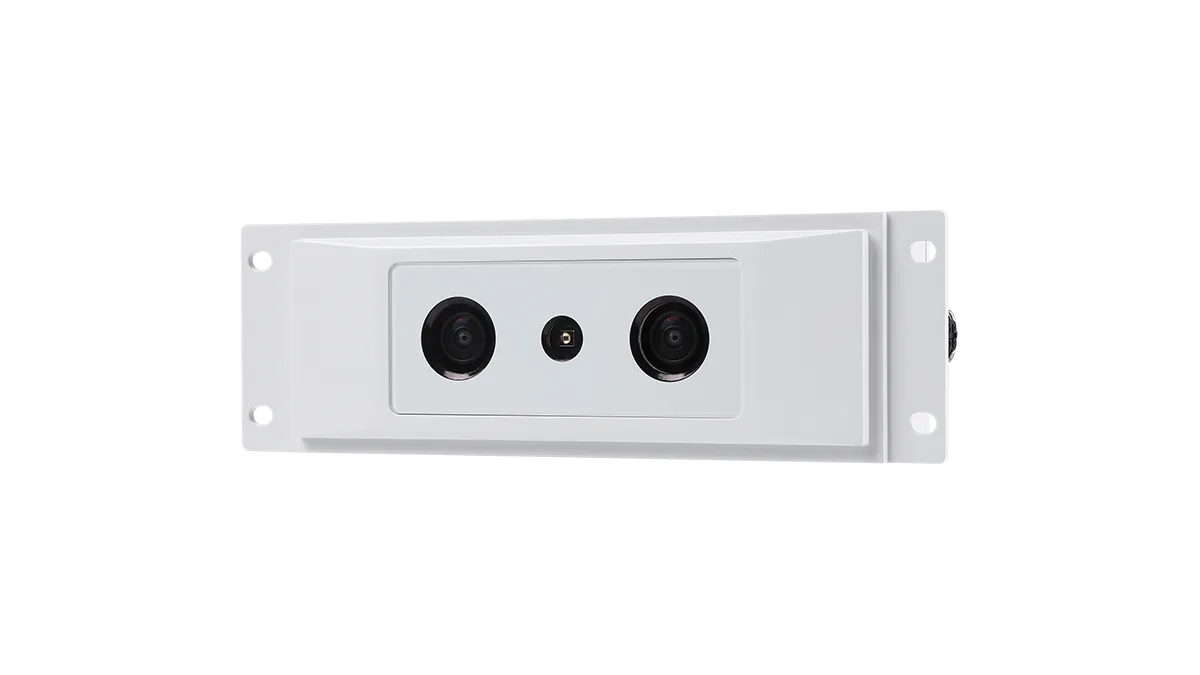
Automatic passenger counting for rail uses a sensor above every door of a train, tram or metro car to count passengers getting on and off at each station, and combines those counts into the load of every car in real time. The data shows operators how many people ride each trip, where trains are crowded, and which cars still have space, without manual surveys.
Automatic passenger counting, usually shortened to APC, is well established on buses. Rail is harder: cars have several wide doors, hundreds of people can board in a 30-second stop, and the equipment has to survive years of vibration and electrical noise on rolling stock. This guide explains how rail APC works, which sensors are used, how the system connects to the train, how accuracy is checked, and what to include in a tender.
Why rail passenger counting is different from bus counting
A city bus usually has two or three doors and a driver who opens them one stop at a time. A rail car is a different environment for passenger counting:
- More and wider doors. A metro car typically has three or four double doors per side, often 1.3 to 1.4 meters wide, so several passengers cross the threshold side by side.
- Short, intense dwell times. At peak hours, boarding and alighting happen at the same time through every door within a short dwell time.
- Train sets, not single vehicles. Counts are needed per car and per train, and cars can be coupled in different formations.
- Level boarding. Platforms are level with the car floor, so there is no step that slows people down and separates them, unlike a bus.
- Rolling stock requirements. Equipment must meet railway standards for vibration, temperature, electromagnetic compatibility and fire safety.
These differences are why rail APC relies on overhead 3D sensors with a wide field of view, tied to the train's door signals, rather than simple beam counters.
How automatic passenger counting works on a train
1. The door opens and a counting window starts
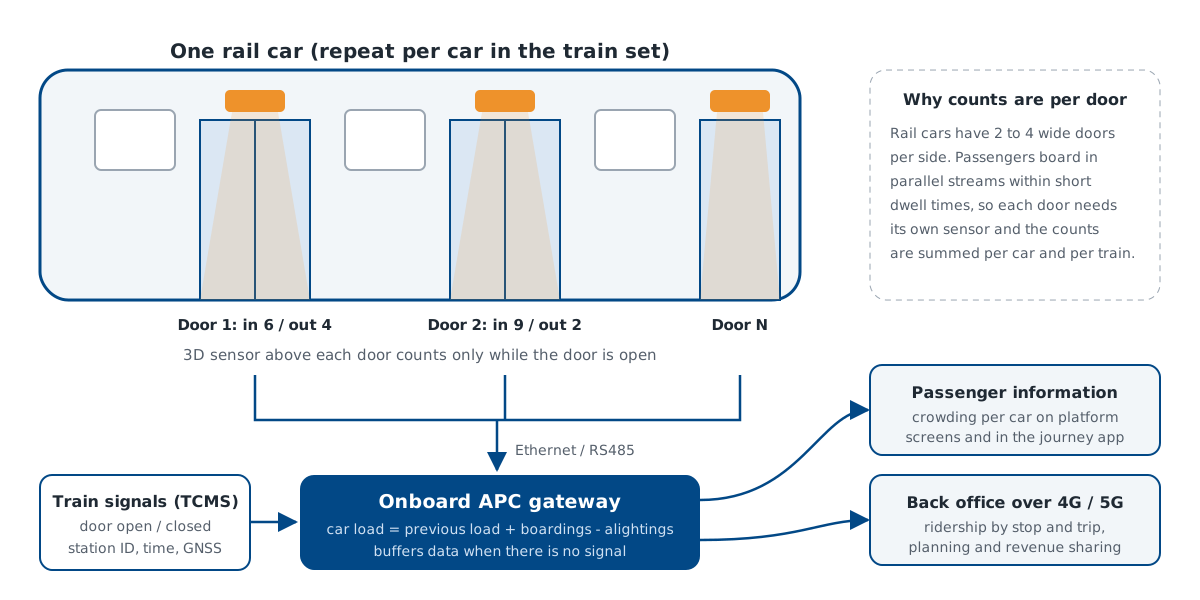
The train's door control or the Train Control and Management System (TCMS) sends a door-open signal. The sensor above that door starts its counting window. Tying the count to the door signal prevents false counts from people standing in the doorway while the train is moving, or from staff walking along the platform.
2. The sensor tracks every head crossing the threshold
A 3D stereo sensor looks straight down at the doorway, builds a depth map, and identifies heads by their height above the floor. Each head is tracked across a virtual line, so the sensor knows whether the passenger boarded or alighted. Depth makes the difference in crowds: two people shoulder to shoulder are still two separate heads, while luggage, prams and bags are filtered out because they are not at head height.
3. The door closes and the counts are sent
When the door closes, the sensor reports boardings and alightings for that door and stop. The onboard gateway adds the counts for all doors of the car and updates the load: previous load plus boardings minus alightings.
4. Counts are matched to the station and trip
The gateway attaches the station, time stamp and trip from the TCMS, the passenger information system or GNSS positioning, so every count belongs to a known stop. The data is buffered on board and uploaded over 4G or 5G, or over Wi-Fi when the train reaches the depot.
Sensor technologies for rail APC
| Technology | How it counts | Strengths | Limitations in rail |
|---|---|---|---|
| 3D stereo vision (overhead) | Two lenses calculate depth and track heads | Separates people walking side by side, ignores luggage, works with wide doors, no identifiable images needed | Needs correct mounting height and a door signal for best results |
| Time-of-flight (ToF) depth sensor | Active infrared light measures distance | Good depth accuracy indoors, independent of ambient light | Strong sunlight at open-air stations can reduce performance on some models |
| Infrared beams | Passengers interrupt light beams across the door | Simple and inexpensive | Miscounts groups and parallel streams; poor fit for wide rail doors |
| Load weighing | Car weight estimated from air-spring suspension pressure | Uses existing vehicle data, no extra sensor | Estimates load only, not boardings and alightings per stop; accuracy depends on average passenger weight |
| CCTV video analytics | AI models count people on existing onboard cameras | Reuses cameras for crowding estimates | Angled cameras see occlusions; less accurate at the threshold than a dedicated overhead sensor |
Many operators combine methods: 3D door sensors for boardings and alightings, and load-weighing data as a plausibility check on the car load. For the technology trade-offs in more detail, see our guide to the challenges associated with people counting.
Integrating passenger counting with the train
Integration decides most of the cost and risk of a rail APC project. Check these points early with the rolling stock team:
- Door signals. Each sensor, or the gateway, needs door-open and door-closed signals, either as discrete inputs per door or as messages from the TCMS.
- Train network. Newer trains use Ethernet consist networks, while older fleets may use MVB, CAN or RS485. The gateway must speak the protocol the train already uses.
- Location and trip data. Counts are only useful when they are matched to stations and timetable trips. Agree whether this comes from the TCMS, the passenger information system or the APC gateway's own GNSS receiver.
- Power. Onboard supplies vary; sensors and gateways must accept the train's auxiliary voltage, directly or through a converter.
- Back office. Define the data format, upload interval and the system that receives the data, for example a ridership database or a planning tool. Our people counting API guide shows typical data payloads.
Accuracy: how rail APC is validated
Accuracy figures are only meaningful when the measurement method is defined. A good validation plan for automatic passenger counting on rail includes:
- A reference count. Record video at a sample of doors and stops, then count boardings and alightings manually from the video.
- Error per door and per stop. Compare the APC counts with the reference for every door opening, not only daily totals, because errors at different stops can cancel each other out in a daily figure.
- Systematic versus random error. A system that always undercounts by 3 percent can be corrected; a system that is randomly wrong by 10 percent cannot.
- Load balancing. At the end of each trip the car should be empty. A load that drifts away from zero shows a bias between boardings and alightings.
- Difficult cases. Include peak hours, luggage, prams, wheelchairs, children, and passengers who stop in the doorway.
In Germany, the VDV association's publication VDV 457 describes requirements and validation methods for automatic passenger counting systems in public transport, and many operators elsewhere use similar principles. Tenders commonly ask for 95 percent accuracy or better at door level, together with a defined test procedure.
Railway requirements for onboard equipment
Equipment mounted on rolling stock must usually be tested against railway standards, for example EN 50155 for electronic equipment on rolling stock, EN 50121-3-2 for electromagnetic compatibility, IEC 61373 for shock and vibration, and EN 45545-2 for fire behavior of materials. The exact list depends on the country, the operator and whether the sensor is inside the passenger area. Ask suppliers for test reports that match your project rather than general statements, and confirm who holds the certificates.
What operators do with rail passenger counting data
- Crowding information. Platform screens and journey apps can show the load of each car before the train arrives, which spreads passengers along the platform and shortens dwell times.
- Timetable and capacity planning. Counts by stop, hour and direction show where extra trains or longer formations are needed, and where capacity can be reduced.
- Revenue sharing. Where several operators or authorities share fare income, counted ridership is often part of the allocation formula.
- Station planning. Boardings per station feed into platform, staircase and entrance planning. For counting inside stations, see our guide to metro passenger counting in stations.
- Service quality reporting. Many public transport contracts require operators to report ridership and crowding to the transport authority.
Rail APC tender checklist
- Number of cars, doors per car, door widths and mounting heights above the door.
- Required accuracy, how it is defined, and the validation procedure, including who performs the reference count.
- Door signal interface and train network protocol.
- Source of station and trip data, and the format of the output data.
- Supply voltage, connector type, operating temperature and the railway standards the equipment must meet.
- Privacy requirements: whether any images may be stored or transmitted.
- Installation method for new trains and for retrofits, and how long each car is out of service.
- Remote monitoring, firmware updates, spare parts and warranty period.
Where Pyroglaux fits
The Pyroglaux PCBot-M40 is a 3D stereo passenger counter designed for metro and train doors. Its 140° by 120° field of view covers wide doors from a low mounting height of about 1.9 to 3 meters, a built-in infrared illuminator keeps counting through tunnels and changing daylight, and an M12 connector takes the door-open signal. Counts are output over the network, with RS485 available for custom protocols, and units can be cascaded for power and data along the car. The manufacturer specifies accuracy of 95 percent or better for boarding and alighting counts; we recommend validating that figure on your own doors during a pilot.
For buses, the PCBot-B40 covers the same job with a 9 to 30 V input, and the full range is listed under passenger flow counters. Send us your door drawings, mounting heights and train network details, and we will recommend a sensor layout and integration approach.
Frequently Asked Questions
What accuracy should a rail APC system achieve?
Many operators and tenders ask for 95 percent or better, measured per door and per stop against a manual or video reference count. Ask how the supplier defines accuracy, because an average over a whole day can hide large errors at busy stops.
Can automatic passenger counting work without a door-open signal?
Some sensors can count continuously, but rail APC is more reliable when each counting window is tied to the door-open and door-closed signals. The signal stops platform staff and people standing in the doorway from being counted while the train is moving.
Do passenger counting sensors store images of passengers?
3D stereo counters calculate depth maps and track head positions; they do not need to store or transmit identifiable images to produce counts. Check the configuration, because some sensors can also stream video for maintenance.
How many sensors does a train need?
Usually one sensor per door leaf pair. Very wide doors, or doors with a central pole, may need two sensors or a wide-angle model. Multiply by the number of doors per side that open at platforms.
Can APC data show crowding before the train arrives?
Yes. Once the train leaves a station, the gateway knows the load of each car and can send it ahead, so platform screens or the journey app can show which cars have space.
Planning a people counting project?
Tell us the site type, entrance widths and mounting height. We reply with a model recommendation and a quotation within one working day.
Get a quoteRecent Articles
- What Is an AI Edge Box? How It Works and How to Choose One · Oct 14, 2026