



7 Challenges Associated with People Counting (and How to Solve Each)
2026-07-30 20:56The main challenges associated with people counting are miscounting groups and carts, lighting changes, two-way doorways, occlusion in crowds, privacy compliance, data silos, and hard mounting spots. Modern 3D and AI counters solve most of these problems, which is why doorway accuracy has risen from around 85 percent on old sensors to 95 to 99 percent today.
Buyers researching the challenges associated with people counting usually got burned by a cheap sensor that produced numbers they could not trust. As a manufacturer of people counting devices, our team at PanPanTech sees the same seven failure modes on almost every rescue project, so the guide below explains each of the people counting challenges and its fix.
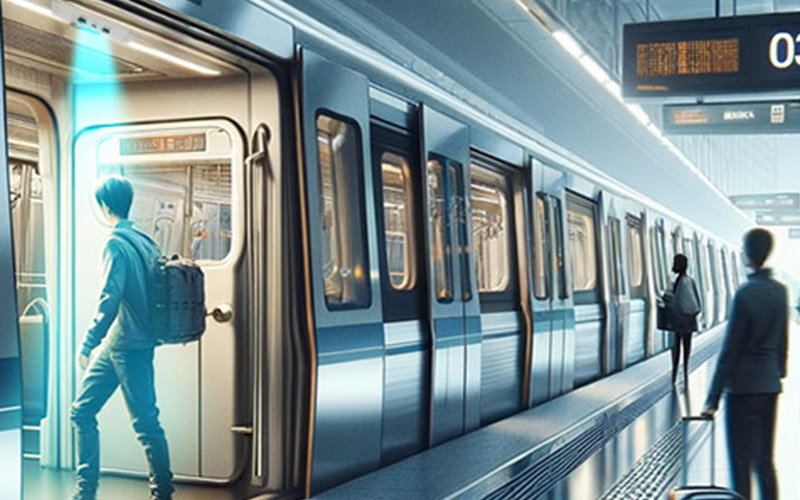
Photo: a busy entrance where groups and carts create people counting challenges.
Why Is Accurate People Counting Hard?
Counting people accurately is hard because a doorway is a messy, real-world scene: groups merge, light shifts, and objects like carts look like customers to a simple sensor. On Quora, one engineer summed up the core issue well: traditional door sensors routinely count a passing shopping cart as a customer and a tight-knit family as a single person. The seven people counting challenges below all trace back to that gap between a raw signal and a real human count.
The 7 Challenges Associated with People Counting
Every deployment must handle these seven people counting challenges, and the technology you choose decides how many of them get solved automatically. Ranking the people counting challenges by how often they break a project, miscounting and privacy sit at the top.
| Challenge | What goes wrong | Best fix |
|---|---|---|
| 1. Groups & carts | Family counts as one; cart counts as a person | 3D depth + AI shape filtering |
| 2. Lighting changes | Sunlight or shadows fool 2D cameras | Stereo depth or thermal sensing |
| 3. Two-way doorways | Entries and exits get mixed up | Bidirectional tracking |
| 4. Occlusion in crowds | People behind people vanish | Overhead mount + AI tracking |
| 5. Privacy compliance | Cameras raise GDPR concerns | Edge processing, no image stored |
| 6. Data silos | Counts never reach POS or BI | Open API integration |
| 7. Hard mounting spots | High ceilings, wide or glass doors | Wide-angle 3D, multi-sensor stitch |
Source: PanPanTech project field data, 2024–2026.
Challenge 1: Miscounting groups and shopping carts
A single-beam or 2D sensor sees a blob, not a body. Two shoppers walking together become one count, and a cart or stroller adds a false count. Depth sensing plus AI shape recognition fixes this: a 3D people counter such as the PCBot-R40 AI flow analysis system measures each object's height and shape, so carts and children are filtered while every adult is counted.
Challenge 2: Changing light and shadows
Direct sun, glass entrances, and evening shadows wreck flat-image counters. Stereo-vision sensors build a depth map that ignores color and brightness, and thermal counters read heat instead of light. Both approaches keep accuracy steady from dawn to dusk, removing one of the oldest people counting challenges. Lighting is among the people counting challenges that beam sensors never truly fixed.
Challenge 3: Two-way doorways
Many entrances serve both entry and exit. A directionless sensor doubles or halves the real number. Bidirectional tracking follows the path of each person across a virtual line, logging entries and exits separately so occupancy math stays correct.
Challenge 4: Occlusion in dense crowds
When a mall corridor fills up, people hide behind other people. An eye-level sensor loses them. Mounting the counter directly overhead and using AI tracking that predicts each path keeps the count accurate even in a packed shopping mall, which is the exact scenario retail buyers on Quora ask about most.
Challenge 5: Privacy and compliance
Shoppers worry about being filmed, and operators worry about GDPR. The fix is edge processing: the sensor turns video into an anonymous count on the device and stores no image or face. A privacy-safe people counting design captures only a number, which answers the common shopper question about stores taking pictures without consent.
Challenge 6: Data trapped in silos
A count that never leaves the sensor cannot drive decisions. The frequent complaint that foot traffic does not predict sales is really a data-integration failure: without linking counts to transactions, conversion rate stays invisible. An open API pushes counts into POS, ERP, and BI tools so foot traffic and revenue sit on one dashboard.
Challenge 7: Difficult mounting locations
High atrium ceilings, four-meter glass doors, and narrow vestibules defeat fixed-range sensors. Wide-angle 3D optics and multi-sensor stitching cover large or awkward openings, and PoE cabling keeps installation to about 15 minutes per unit.
Photo: an analytics dashboard that unifies people counting data with sales.
How Does AI Reduce People Counting Errors?
AI reduces people counting errors by classifying every moving object, so the system counts adults, ignores carts and children, and tracks each path through occlusion. Older sensors apply a fixed rule to a blurry signal, while an AI model learns the difference between a person, a cart, and a shadow, clearing most people counting challenges at once. AI is why leading 3D counters now claim 95 to 99 percent accuracy versus 80 to 90 percent for legacy beams.
How Big Is the People Counting Market?
The global people counting system market was valued at 1.26 billion USD in 2024 and is forecast to reach 2.65 billion USD by 2030, a 13.7 percent CAGR. Demand for accurate, AI-based sensors that overcome these people counting challenges drives the growth.
| Indicator | Value |
|---|---|
| Market size 2024 | USD 1.26 billion |
| Forecast 2030 | USD 2.65 billion |
| CAGR 2025–2030 | 13.7% |
| Largest end use | Retail, supermarkets, malls (20%+) |
Source: Grand View Research, People Counting System Market Report 2025–2030.
FAQ: Common People Counting Questions
What is the best way to count crowd traffic in a shopping mall?
Overhead 3D stereo sensors at each entrance give the most accurate mall footfall, because depth sensing separates dense crowds that defeat beam and 2D counters. Add Wi-Fi zone counting for dwell-time trends inside the mall.
Is there a device to detect the number of people in a room?
Yes. A ceiling-mounted 3D people counter or an occupancy sensor reports live room count. A people counter logs entries and exits, while an occupancy sensor confirms whether anyone is present at all.
What is the difference between an occupancy sensor and a motion sensor?
A motion sensor triggers only on movement and resets when a still person stops moving. An occupancy sensor detects presence even without motion, so it holds a count for someone sitting still.
Can foot traffic analytics predict retail sales?
Foot traffic alone does not predict revenue, but combined with transaction data it reveals conversion rate, which is the metric that guides staffing and merchandising. The value comes from integrating counts with sales, not from counts by themselves.
How accurate can people counting be?
A well-installed 3D AI people counter reaches 95 to 99 percent accuracy. Request an accuracy validation plan for your site through the PanPanTech contact page.